

You’ve found a Master’s course in Spain that looks perfect for your career. It covers artificial intelligence, digital business, practical projects and the latest industry skills. The school has a recognised university partner, and everything seems to fit your ambitions.
But when you search for the qualification on Spain’s official university register, RUCT, you can’t find it. Does that mean the qualification isn’t legitimate? Is the school not recognised? Or is there something important about the Spanish higher education system you haven’t been told?
The answer lies in understanding the difference between an official Master’s degree and a continuing education Master’s, and why both exist.
What is the RUCT in Spain?
RUCT stands for Registro de Universidades, Centros y Títulos, Spain’s official Register of Universities, Centres and Qualifications. Managed by the Spanish Ministry and responsible for universities, RUCT provides public information about recognised universities and official qualifications in Spain.
It’s an important resource when researching postgraduate study, but there’s a distinction many international students don’t realise: not every legitimate, university-awarded Master’s qualification is an official Máster Universitario.
A university can be registered on RUCT and offer both official Master’s degrees and continuing education Master’s qualifications. These are different academic pathways with different purposes. So, if a particular course isn’t listed among the official Master’s degrees, that doesn’t automatically mean it lacks academic credibility.
Máster Oficial vs Máster de Formación Permanente: What’s the difference?
Spanish universities offer two main types of Master’s qualifications that prospective postgraduate students should understand.
An official Master’s (Máster Universitario) is a qualification approved through Spain’s formal university verification process and will be registered in the RUCT. These degrees have official academic status and can be particularly important for students pursuing doctoral studies, certain regulated professions or careers requiring an official qualification in Spain (think public workers, like nurses or public school teachers.)
A continuing education Master’s (Máster de Formación Permanente) is a postgraduate qualification awarded by a university under its own framework. These courses are designed to develop specialist knowledge, update professional skills and respond to changing academic and industry needs.
Continuing education Master’s qualifications are recognised within Spanish university regulations and are subject to university academic quality assurance. Both official Master’s degrees and continuing education Master’s qualifications can carry the same number of ECTS credits; a 60 ECTS continuing education Master’s therefore represents the same stated volume of study as a 60 ECTS official Master’s.

This is why students should look beyond RUCT registration and consider the academic content, university awarding the qualification and professional relevance of their chosen course. The distinction between both options isn’t simply about which qualification is better. It’s about what you want to achieve.
If your goal is academic research or a profession requiring an official degree, a Máster Universitario may be essential. If you’re looking to develop practical business expertise, change careers or specialise in an emerging field, a Máster de Formación Permanente may be the right choice.
Why can developing an official Master’s degree take so long?
Creating an entirely new official Master’s qualification in Spain involves a structured process. Universities must develop a detailed academic proposal, undergo external quality evaluation, obtain the necessary verification and authorisations, and complete the procedures required for official recognition and registration.
These requirements protect academic standards, but planning and launching a new qualification can be a lengthy undertaking, potentially extending over years when curriculum development, institutional preparation and approvals are considered together.
Developing a new official qualification involves a different level of external regulation from creating a continuing education Master’s. And in industries where technology changes almost overnight, that difference can matter.
What happens when technology moves faster than education?
Think about how dramatically artificial intelligence has changed business in just a few years.
In late 2022, ChatGPT was only beginning to enter public awareness. Today, businesses are exploring AI agents, automated workflows, predictive analytics, AI-powered marketing and entirely new approaches to customer engagement. The skills employers are looking for are evolving rapidly.
Now imagine designing a new Master’s course around a technology that could transform significantly during the time needed to develop and approve an entirely new official qualification. This is where continuing education Master’s courses can offer a real advantage.

Because they operate under a different university approval framework, they can provide greater flexibility when developing specialist courses and adapting their content to emerging professional needs.
A digital marketing course can explore new AI tools and changing search behaviours. A business management course can examine automation, AI-driven decision-making and contemporary leadership challenges. An entrepreneurship course can respond to new digital business models and emerging technologies.
That doesn’t mean official Master’s degrees are outdated. Many universities deliver excellent, forward-thinking official qualifications. It simply means that continuing education offers another valuable route, particularly for students who want to learn skills they can apply in today’s professional environment.
Why innovative private business schools take a different approach
Private business schools often focus on connecting academic learning with professional practice. Rather than concentrating exclusively on traditional academic pathways, they can develop specialist courses around the needs of modern businesses, working with university partners, experienced educators and industry professionals.
For students, this can create a more practical learning experience. Instead of studying artificial intelligence purely as a technical concept, you might explore how businesses use it to improve marketing, streamline operations or make better decisions.
Rather than simply learning entrepreneurship theory, you could work through the real challenges of developing and growing a business.
And because continuing education qualifications have a different approval structure, universities and their educational partners have opportunities to respond more flexibly to changing industries while maintaining academic oversight.
The important thing is to look beyond the qualification’s title and consider the curriculum, teaching approach, awarding institution and relevance to your ambitions.
How BLC Spain approaches postgraduate education
At BLC Spain, we believe postgraduate education should prepare students for the business world they’re entering, not just the one that existed when their course was first designed.
That’s why our Master’s courses focus on combining academic foundations with practical skills and contemporary industry knowledge.
Our postgraduate courses are delivered in partnership with Universidad Europea del Atlántico (UNEATLÁNTICO), a recognised Spanish university registered in RUCT.
Our continuing education Master’s options include:
- Master of Business Administration and Spanish, combining business strategy, leadership, finance and operations with AI in modern business management.
- Master in Digital Marketing with Artificial Intelligence and Spanish, focusing on digital marketing strategy, analytics, consumer behaviour and the practical application of AI.
- Master in Spanish Language and Culture, offering intensive Spanish language education and cultural immersion for university graduates.
Our business Master’s courses are taught in English alongside daily Spanish classes, providing the opportunity to develop professional knowledge while building language skills and experiencing life in Madrid.
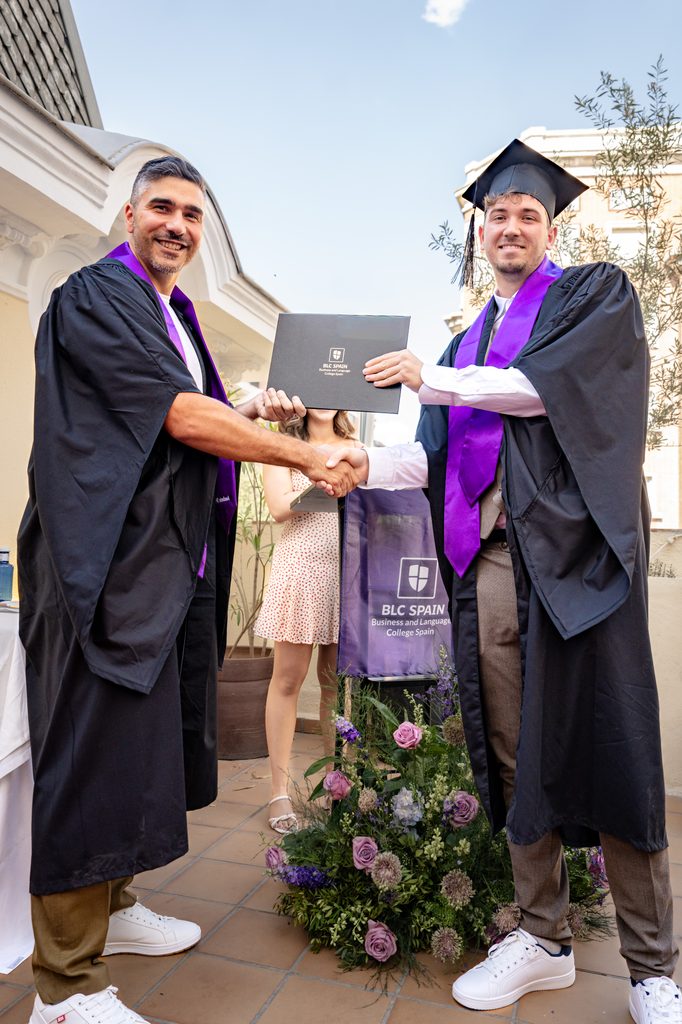
With small classes, practical projects and personal academic support, we aim to make learning relevant, engaging and connected to the challenges students will encounter beyond the classroom.
So, does RUCT registration matter when choosing a Master’s in Spain?
Understanding the RUCT and the official status of a degree is important when you’re thinking about your future career. However, an absence from its official Master’s listings doesn’t automatically mean a course is unrecognised or not the right choice for you.
What matters is understanding exactly which qualification you’re studying for and whether it supports your future plans.
Before choosing a Master’s, ask yourself:
- Do I need an official qualification for further academic study or a regulated profession in Spain?
- Am I looking for practical, career-focused skills in a particular industry?
- Does the curriculum reflect current professional developments?
- Who awards the qualification, and what academic quality assurance applies?
- Will the teaching approach help me apply what I’ve learned?
An official Master’s and a continuing education Master’s serve different purposes, and both can offer genuine value.
In fast-moving fields such as AI, digital marketing and business management, being able to learn about emerging technologies and their practical applications can be a significant advantage.
At BLC Spain, we believe the right education should give you more than a qualification. It should give you relevant knowledge, practical confidence and the skills to move forward in your career.
If you’re exploring postgraduate study in Madrid, our admissions team can help you understand your options and decide which Master’s best suits your goals.