
The Future-Ready Student: How AI Helps You Think Better, Learn Faster, and Build
Smarter.

AI tools for students are becoming part of everyday academic life, but using AI well is not just about knowing which app to open.
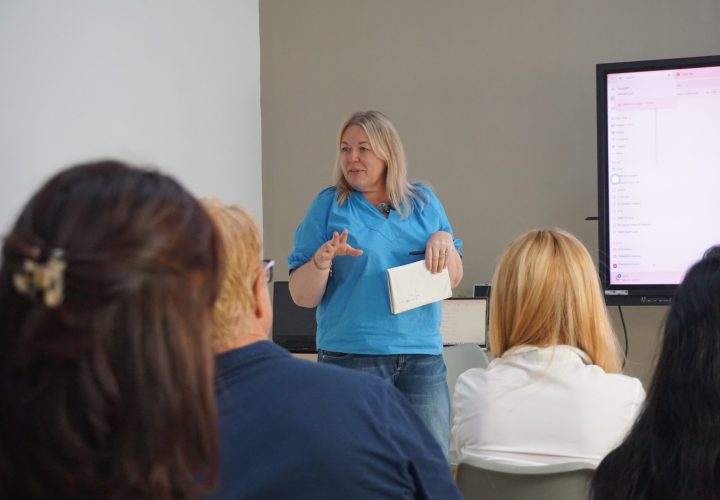
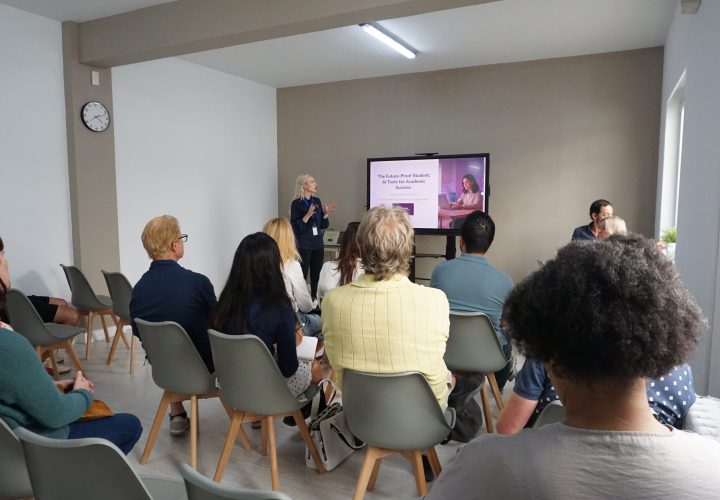
At a recent BLC Spain AI event, students explored a more important question: how can AI help you think better, learn faster and build smarter without replacing your own judgement?
The session focused on practical AI tools for academic success, responsible AI use in education, critical thinking and the growing importance of AI skills for the future of work. The main takeaway was clear: AI can help students move faster, but the real value is learning how to use it with purpose.
For students considering postgraduate study in Spain, especially in digital marketing with AI, business administration or international business, this is an important shift. Employers are not only looking for people who can use technology. They are looking for people who can use technology well, with judgement, creativity and responsibility.
Table of Contents
5 Key Takeaways from BLC Spain’s AI Event
The event was not about using AI for everything. It was about using AI with better judgement.
The strongest takeaways for students were:
- Start with the academic or professional problem, not the tool.
- Use AI as a tutor that questions you, not as a shortcut that replaces your work.
- Ask AI to challenge your reasoning, not just confirm your ideas.
- Check important claims against reliable sources before using them in academic work.
- Build repeatable AI workflows that help you study, plan, revise and improve over time.
Together, these habits help students become more confident, independent and prepared for modern academic and professional expectations.
Why AI Skills Matter for Students Today
AI extends far beyond technical boundaries. It is becoming part of everyday academic and professional life.
Students now use AI to organise notes, prepare for exams, understand difficult readings, practise languages, plan projects, check ideas and prepare for interviews. In business and marketing, AI is also being used for SEO research, content planning, campaign strategy, automation, analytics and decision support.
But using AI well is not the same as using it often.
A future-ready student knows how to ask better questions, check the quality of the answer, challenge weak reasoning and decide what still needs human judgement. This is particularly important in academic work, where understanding matters more than simply producing an answer.
Students are encouraged to think about how AI can support real academic and professional tasks, not as a replacement for their own work, but as a tool to improve how they learn and think.
At BLC Spain, this connects directly to practical learning.
Start With the Problem, Not the AI Tool
One of the strongest insights from the event was that students should not begin by asking, “Which AI tool should I use?”
They should begin by asking, “What problem am I trying to solve?”
For a student, that problem might be:
- understanding a difficult reading
- preparing for an exam
- improving an essay
- practising Spanish
- testing a business idea
- planning a presentation
- organising a study schedule
- developing a digital marketing campaign
Once the problem is clear, the tool becomes easier to choose.
AI is useful when it helps you produce the same quality faster, or better quality with the same effort. If it does neither, it may simply be adding noise.
This is an important mindset for students – AI should not be used because it is fashionable. It should be used because it helps solve a real problem, improve learning or support better decision-making.
Use AI as a Tutor, Not a Substitute
A major theme of the event was responsible AI use in education. AI should support learning, not replace it. Many students ask AI to summarise a reading, explain a theory or write a first draft. These uses can be helpful, but they can also create a problem: the AI may do too much of the thinking.
A student may read an AI-generated summary and feel they understand the topic, but when asked to explain it without the text, the understanding may not be strong enough. Recognition is not the same as learning. A better approach is to use AI as a tutor…
Instead of asking:
“Can you summarise this for me?”
Try asking:
“Ask me questions about this reading one at a time. Start easy, then make them harder. Wait for my answer, correct me and tell me which ideas I am least sure about.”
This turns AI into an active learning tool. It helps students practise recall, receive feedback and identify gaps in their understanding.
The final test is simple: If you cannot explain it and defend it, it is not yours yet. That principle matters in academic assignments, presentations, exams, interviews and professional work.
How AI Can Improve Critical Thinking
AI tools can sound confident and still be wrong. That is why human judgement remains essential.
One of the most useful lessons from the event was that students should use AI not only for answers, but for better questions. This is especially valuable for essays, business projects, marketing plans and academic research.
Students can ask AI:
“What is the strongest objection to my argument?”
“Where is my reasoning weak?”
“What have I failed to justify?”
“What evidence would change my conclusion?”
“Which claims should I verify in a primary source?”
This helps students move beyond passive AI use. Instead of accepting the first answer, they learn to challenge ideas, test assumptions and strengthen their own thinking.
This is where AI and critical thinking can work together. AI can expose weak points, suggest alternative perspectives and help students prepare for feedback. But the student still needs to verify sources, make decisions and take responsibility for the final work.

AI gives you possibilities. Sources give you evidence. You provide the judgement.
Responsible AI Use in Academic Work
Students should be careful when using AI for factual claims, statistics, references, legal information, business data or anything that will be submitted or presented. AI can make mistakes, and it can sometimes create information that sounds reliable but needs checking.
Good academic AI habits include:
- using AI to clarify ideas, not replace your work
- asking AI to challenge your argument
- checking important claims against original sources
- keeping your own voice in written work
- making sure you can explain what you submit
- using AI feedback as guidance, not as final authority
For international students preparing for postgraduate study in Madrid, these habits are especially useful. They help students become more confident, independent and prepared for academic expectations in a modern learning environment.

Responsible AI use is not about avoiding AI completely. It is about using it in a way that supports learning and protects academic integrity.
Learn the Workflow, Not Just the App
Another important idea from the BLC Spain event was that students should not focus only on individual AI tools. Tools will change. Workflows matter more.
A workflow is a repeatable process that helps you achieve a useful result.
For example, a student could build an AI study workflow that:
- reviews authorised course material
- creates a two-week study plan
- generates daily practice questions
- marks answers
- identifies weak areas
- adjusts the next day’s revision
That is much more useful than one simple prompt.
For students interested in digital marketing with AI, business administration or international business, this way of thinking is especially valuable. In the workplace, AI is increasingly used for campaign planning, SEO research, content strategy, project management, customer analysis, decision support and workflow automation.

The students who understand how to build useful AI workflows will be better prepared for modern careers.
Why Being AI-Curious Helps Employability
One of the clearest employer messages from the event was the value of being AI-curious.
You do not need to be a programmer. You do not need to know every AI platform. But you do need to be willing to experiment, ask better questions and apply AI to real problems.
Being AI-curious might mean using AI to:
- practise Spanish
- build a study assistant
- prepare for a job interview
- organise research
- test a business idea
- improve a marketing plan
- create a content workflow
- review your own understanding
Knowing how to work well with AI can help students learn faster, think more clearly and build stronger professional judgement. These are useful skills for students preparing for international careers, especially in business and marketing roles where technology, communication and decision-making increasingly overlap.

For BLC Spain students, this connects directly to employability. AI is already shaping digital marketing, business strategy, entrepreneurship, communication and international management.
A Practical AI Challenge for Students
The best way to build AI skills is to use AI on a real task.Choose one assignment, reading, presentation, business idea or job application this week. Then use AI to help you learn, not to avoid learning.
Try this simple process:
- Ask AI to question you about the topic.
- Test yourself without visible answers.
- Ask AI to challenge your draft.
- Check important claims against original sources.
- Practise explaining the idea out loud.
- Reflect on whether AI helped you think better or simply finish faster.
This is the difference between passive AI use and future-ready AI use.
Study Future-Ready Skills at BLC Spain
BLC Spain is an international business school in Madrid offering English-taught postgraduate programmes that combine practical academic learning, Spanish language development and international experience.
For students interested in AI skills, digital business, marketing, management and the future of work, BLC Spain offers programmes connected to real-world professional development, including the Master in Digital Marketing with AI and Spanish and the Master in Business Administration and Spanish.
These programmes are designed for students who want more than theory. They are for students who want practical skills, international experience and the confidence to adapt in a changing professional world.
The future-ready student is not the one who lets AI do the work. It is the one who learns how to work well with AI.
Explore BLC Spain’s programmes in Madrid and speak with Admissions about which option best fits your goals.
Fall in Love with Learning Again at BLC Spain
At BLC Spain, postgraduate study is about growth, curiosity, and real-world connection. Madrid provides the international ecosystem. BLC Spain provides the academic direction, community, and support.
Advance your career in an international city where learning feels human again.
Explore Postgraduate Programs at BLC Spain
Apply for our programs in Madrid today
Applying to English-Taught Programs in Spain

Eligibility Requirements
- A valid high school diploma or bachelor’s degree (for master’s programs).
- Proof of English proficiency (TOEFL, IELTS, or equivalent). *BLC Spain can be flexible with students that do not have any official proof of their level.
- A strong academic record and relevant experience for certain master’s programs.
Application Process
- Research Programs: Identify universities and programs that align with your goals and interests.
- Prepare Documents: Gather academic transcripts, recommendation letters, and a statement of purpose tailored to each program.
- Submit Applications: Most institutions allow online submissions through their portals.
Secure Your Visa to study in Spain
For non-EU students, a student visa is mandatory. Start the process early to avoid delays.
Deadlines for application
Application deadlines vary by institution, but most programs accept applications from October to May for fall enrollment. BLC Spain accepts applications all year long, with intakes happening in January and October each year.
Studying in Spain in English offers the perfect blend of high-quality education and cultural immersion. Programs like those at Business and Language College Spain (BLC Spain) allow you to gain a global perspective while mastering Spanish—a skill that opens doors to endless opportunities. Whether you’re pursuing a business degree, an MBA, or another discipline, Spain provides the ideal environment to grow academically, professionally, and personally.
Ready to take the next step in your academic and professional journey? Discover how BLC Spain can help you achieve your goals. Contact us today to learn more about our programs, admissions process, and how we can support you in building a successful career in Spain and beyond.
Visit our website at www.blcspain.com or reach out directly to our admissions team for personalized guidance. Your future in Spain starts now!